
Public Speaking Club: Practice Better Between Meetings
How to use a public speaking club more effectively by practicing before meetings, after feedback, and between live sessions.
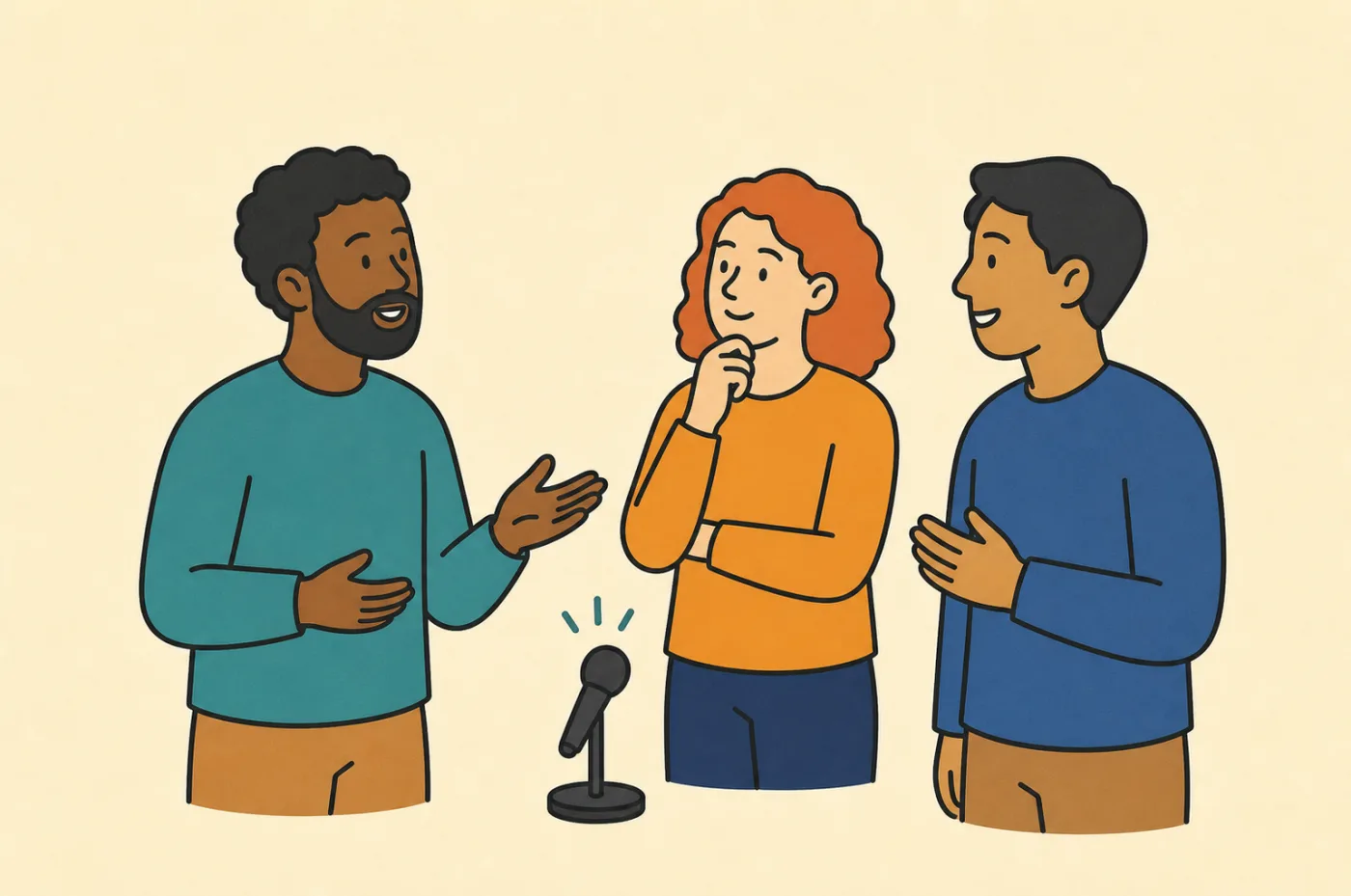
A public speaking club helps more when you practice the exact moment that usually breaks down. For this topic, that means using live feedback, then doing short reps between meetings.
The method is to treat the club as feedback, not the only practice.
The quick version
- Practice before the meeting.
- Bring one behavior to improve.
- Use feedback in a second take afterward.
- Keep solo practice short and consistent.
What a public speaking club gives you
Live practice gives you three things that solo practice cannot fully recreate.
- Audience attention.
- Social pressure.
- Feedback from real listeners.
That is valuable. It helps you learn how your speaking lands with other people.
The limitation is volume. In a group setting, you may speak only a few times. That is why short practice between meetings matters.
Practice before the meeting
Before a public speaking club meeting, record a 60-second answer to a likely prompt.
Use this structure.
- Point.
- Reason.
- Example.
- Close.
Do not try to memorize the answer. Practice the route. If you understand the route, you can adjust when the real prompt changes.
This is the same foundation used in public speaking practice and public speaking skills.
Practice after feedback
Feedback is most useful when you turn it into one specific drill.
If someone says you rushed, record the same answer again and slow down the first sentence. If someone says your answer lacked structure, practice opening with the point. If someone says you ended weakly, practice one-sentence endings.
Do not try to fix every note at once. One note per recording is enough.
Toastmasters public speaking practice
Toastmasters public speaking and other public speaking organizations can be especially useful for structured repetition. You may practice speeches, evaluations, impromptu speaking, and feedback.
Minute Hatch is not affiliated with Toastmasters. If you want a related routine, read the Toastmasters impromptu speaking guide and adapt it for your group.
The same principle applies: live sessions create pressure, private practice creates reps.
Public speaking groups versus solo practice
Public speaking groups help you learn how other people experience your communication. Solo practice helps you repeat the same skill enough times to improve it.
You need both if you want progress to feel faster.
Use the group to test your speaking. Use recordings to train your speaking.
If anxiety is the main issue, read public speaking anxiety. If stage pressure is the issue, read stage fear.
A simple weekly routine
Use this rhythm around your public speaking club.
- Before the meeting: record two 60-second answers.
- During the meeting: ask for one specific feedback note.
- After the meeting: record the same answer again and apply the note.
- Later in the week: use a new prompt and repeat the pattern.
This keeps practice connected to real feedback without waiting for the next meeting.
Minute Hatch helps you practice between public speaking groups with prompts, short recordings, and focused feedback. It gives you more speaking reps before your next live turn.
For a next step, read public speaking practice and impromptu speech training.
Related resources
Keep practicing this topic
Public Speaking for Students: Make Class Answers Clear
A student public speaking guide for clear points, simple structure, class presentation practice, nerves, and feedback.
Read guideHow to Speak Confidently: Start Before You Feel Ready
A practical guide to speaking confidently by using clear starts, slower pacing, concrete examples, and short practice reps.
Read guidePublic Speaking Anxiety: A Step-by-Step Practice Plan
Use gradual exposure, short recordings, calmer openings, and recovery drills to manage public speaking anxiety before high-pressure speaking moments.
Read guide