
Public Speaking Anxiety: A Step-by-Step Practice Plan
Use gradual exposure, short recordings, calmer openings, and recovery drills to manage public speaking anxiety before high-pressure speaking moments.
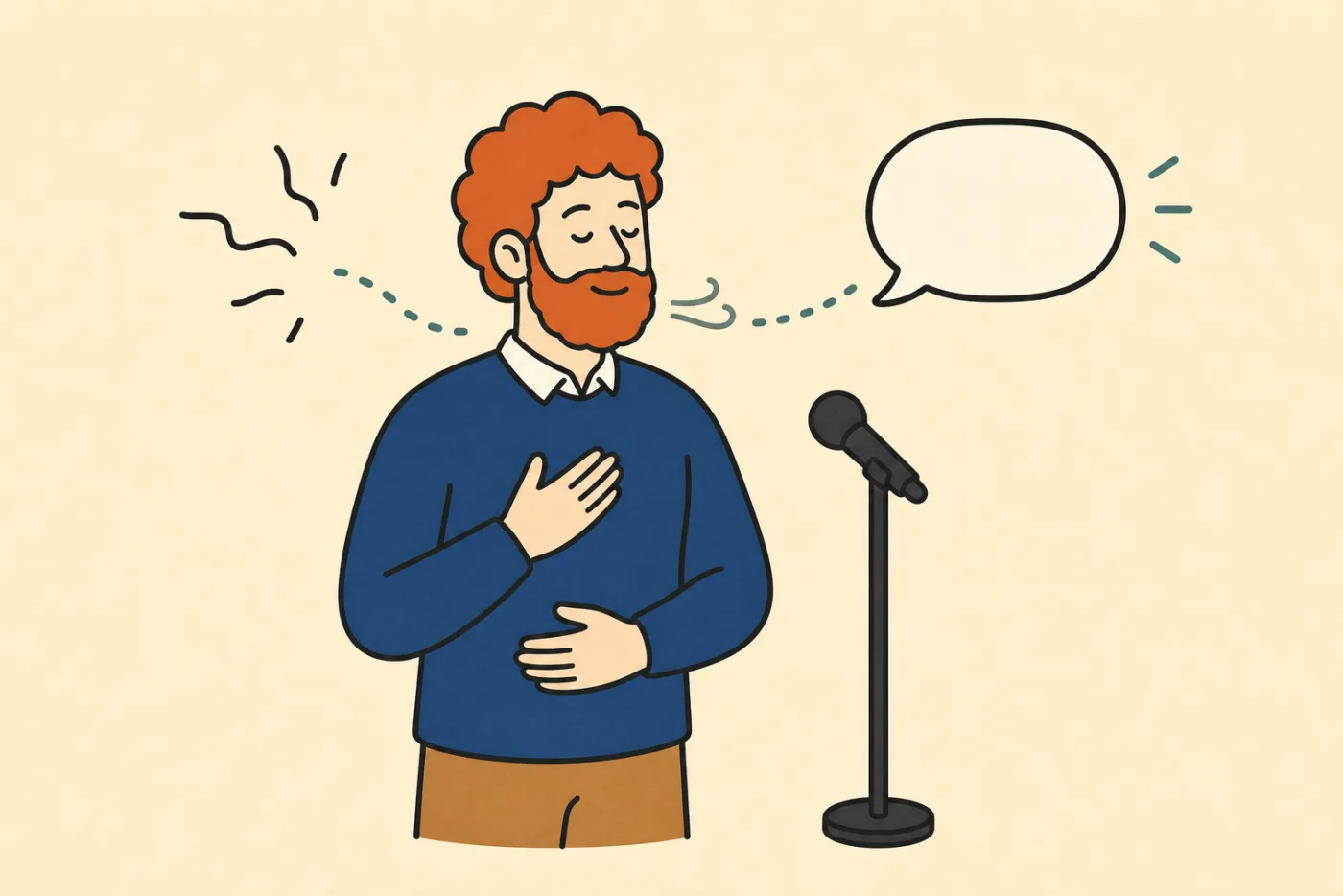
Public speaking anxiety can feel strongest before the first sentence. A practical way to manage it is to make the speaking task smaller, rehearse under mild pressure, and practice recovering from mistakes.
The method is to start smaller than a full speech and build evidence through short reps.
Use the quick version first. Then practice the detailed sections out loud.
If you are afraid of public speaking, start with a private one-minute version of the moment before you try to force yourself through the full event.
The quick version
- Practice the first sentence alone.
- Use small doses of pressure.
- Listen for evidence instead of flaws.
- Practice recovery, not perfection.
Start smaller than a full speech
Many people try to overcome stage fright by forcing themselves into big speaking moments. That can work for some people, but it is not the easiest starting point.
Start with one-minute prompts instead. A short recording gives you enough pressure to practice without making the session feel impossible.
Use this loop.
- Pick a prompt.
- Pause for one second.
- Answer for 60 seconds.
- Listen for the first sentence, pacing, and ending.
- Repeat once with one small correction.
This is the same structure used in public speaking practice, but the focus is calmer repetition.
Train the first sentence
Public speaking anxiety often spikes at the beginning. Once the first sentence lands, the rest gets easier.
Prepare opening patterns, not full scripts.
- "The main point is..."
- "The simplest way to explain this is..."
- "The reason this matters is..."
- "I would start with the tradeoff..."
These phrases give your brain a reliable way to begin. They are also useful for impromptu speech practice, interviews, and presentation Q&A.
Use pressure in small doses
Practice should feel slightly uncomfortable, not overwhelming. If the prompt is too hard, choose an easier one. If 60 seconds is too long, start with 30 seconds and build up.
The point is consistency. Public speaking anxiety becomes harder to manage when speaking is avoided completely, then faced only in high-stakes moments.
Short practice makes the feeling less surprising. You learn that you can pause, answer, and recover even if your voice is not perfect.
Public speaking anxiety for introverts
Introverts do not need to copy a loud or highly performative speaking style. Calm, direct delivery can be confident when the point is clear.
Prepare the route instead of memorizing every word:
- Main point.
- Reason.
- Example.
- Closing sentence.
Then practice being seen in small steps. Record alone, record while standing, speak to one trusted person, give a short group update, and only then build toward a longer presentation. This gradual exposure lets you practice pressure without making every repetition a major event.
For Q&A, prepare bridge sentences rather than scripts. "The way I would think about it is...", "The main tradeoff is...", or "The practical answer is..." can give you a second to organize your response without sounding evasive.
Slow the first sentence, pause before the main point, use one concrete example, and stop before nervous extra details appear. The goal is a speaking pattern that works with your natural energy instead of asking you to imitate someone else's personality.
Listen for evidence, not flaws
When you listen back, do not hunt for everything you dislike about your voice. That turns practice into punishment.
Listen for evidence.
- Did you start more clearly than last time?
- Did you pause instead of rushing?
- Did you use one example?
- Did the ending stop cleanly?
This is how how to speak confidently becomes practical. Confidence grows when you hear specific proof that your speaking pattern is improving.
Stage fright and recovery
Stage fright is not only the feeling before you speak. Public speech anxiety is also the recovery after something goes wrong.
Practice small recovery moves.
- Pause and restart the sentence.
- Say the point more simply.
- Use an example if the answer feels abstract.
- End the answer instead of apologizing for it.
The ability to recover matters more than the ability to avoid every stumble.
Build a repeatable routine
Use three sessions per week.
- Session 1: easy prompts, focus on starting calmly.
- Session 2: work or presentation prompts, focus on pacing.
- Session 3: surprise prompts, focus on recovery.
If you want more daily structure, read speaking skills improvement. If your answers get too long when you are nervous, read how to stop rambling.
Minute Hatch helps you rehearse high-pressure speaking moments privately with prompts, one-minute recordings, and focused feedback. Start with the public speaking practice app to build repetition before the real meeting, interview, or presentation.
For a next step, read stage fear and build a private-to-live practice ladder for your next speaking event.
Related resources
Keep practicing this topic
Stage Fear: Practice the Moment Before You Speak
A practical stage fear guide for smaller stages, first sentences, short practice, recovery, and weekly routines.
Read guideHow to Speak Confidently: Start Before You Feel Ready
A practical guide to speaking confidently by using clear starts, slower pacing, concrete examples, and short practice reps.
Read guidePublic Speaking Practice: Use 60-Second Drills
A practical public speaking practice routine for presentations, Q&A, interviews, and speaking under pressure.
Read guide