
Public Speaking for Students: Make Class Answers Clear
A student public speaking guide for clear points, simple structure, class presentation practice, nerves, and feedback.
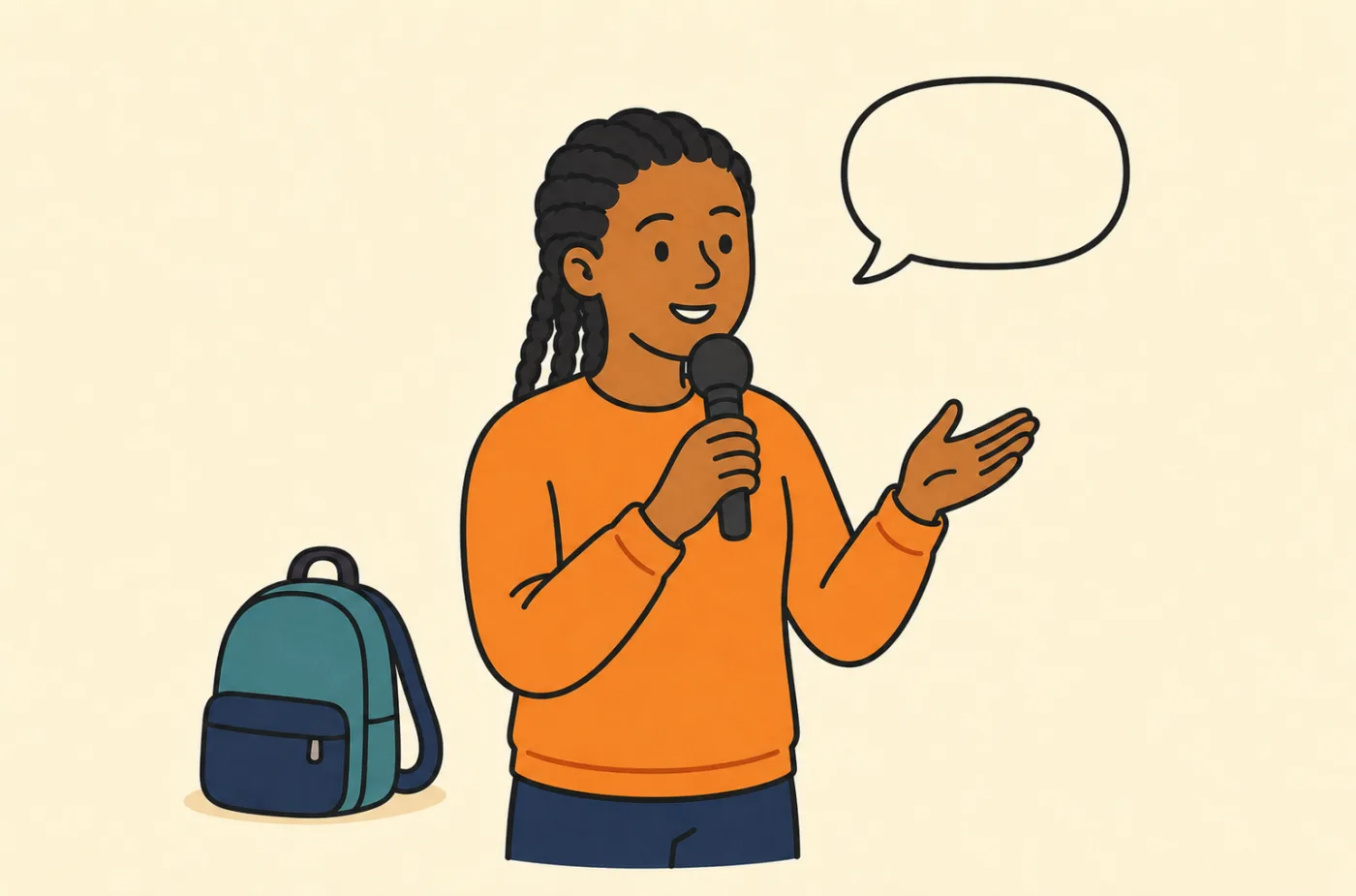
Public speaking for students improves when you practice the exact moment that usually breaks down. For this topic, that means making class presentations and answers easier to follow.
The method is to practice one clear idea before trying to sound polished.
The quick version
- Start with one point.
- Use a simple structure.
- Practice out loud before class.
- Ask for feedback on one behavior.
Start with one clear point
Before you speak, choose the one sentence you want the listener to remember.
For example: "Students should practice clear communication because it helps their ideas get understood." That sentence gives the speech a path.
If you start with background before choosing the point, the answer can become confusing. Public speaking skills for students improve faster when the first sentence gives direction.
Use a simple student speech structure
Use point, reason, example, close.
- Point: say the answer.
- Reason: explain why it matters.
- Example: make it concrete.
- Close: repeat the main idea in a final sentence.
This structure also works for impromptu speech for students, where the preparation time is shorter.
Practice class presentations out loud
Reading a presentation silently is not the same as practicing public speaking. You need to hear the words.
Record a 60-second version of your class presentation. Then listen for three things.
- Did the first sentence explain the topic?
- Did the example make the point clearer?
- Did the ending sound finished?
If the answer is no, fix one part and record again.
For presentation-specific structure, read speech presentation.
Handle nerves before speaking
Nerves are common. The mistake is waiting until the real presentation to practice feeling nervous.
Use small practice sessions so the pressure becomes familiar. Start with easy prompts, then move to class topics, then practice in front of one person.
If anxiety is the main issue, read public speaking anxiety. If the issue is being watched, read stage fear.
Student public speaking prompts
Try these prompts:
- What skill should every student learn?
- Should students practice speaking in every class?
- What makes a good group project?
- What habit helps students communicate better?
- Why is confidence important in school?
Answer each prompt for 60 seconds. Do not restart. The goal is to build the habit of finishing.
Practice feedback
After each recording, choose one note.
Maybe the opening was unclear. Maybe the example was too general. Maybe the ending became too long.
Fix only one thing in the next take. That makes practice easier and more useful.
Minute Hatch helps students practice public speaking with prompts, short recordings, and focused feedback. You can practice before class without waiting for a live audience.
For a next step, read impromptu speech for students and public speaking practice.
Related resources
Keep practicing this topic
How to Speak Confidently: Start Before You Feel Ready
A practical guide to speaking confidently by using clear starts, slower pacing, concrete examples, and short practice reps.
Read guidePublic Speaking Anxiety: A Step-by-Step Practice Plan
Use gradual exposure, short recordings, calmer openings, and recovery drills to manage public speaking anxiety before high-pressure speaking moments.
Read guidePublic Speaking Club: Practice Better Between Meetings
How to use a public speaking club more effectively by practicing before meetings, after feedback, and between live sessions.
Read guide