
Public Speaking for Introverts: Practice First
A practical public speaking guide for introverts who want calm preparation, shorter reps, and clearer Q&A.
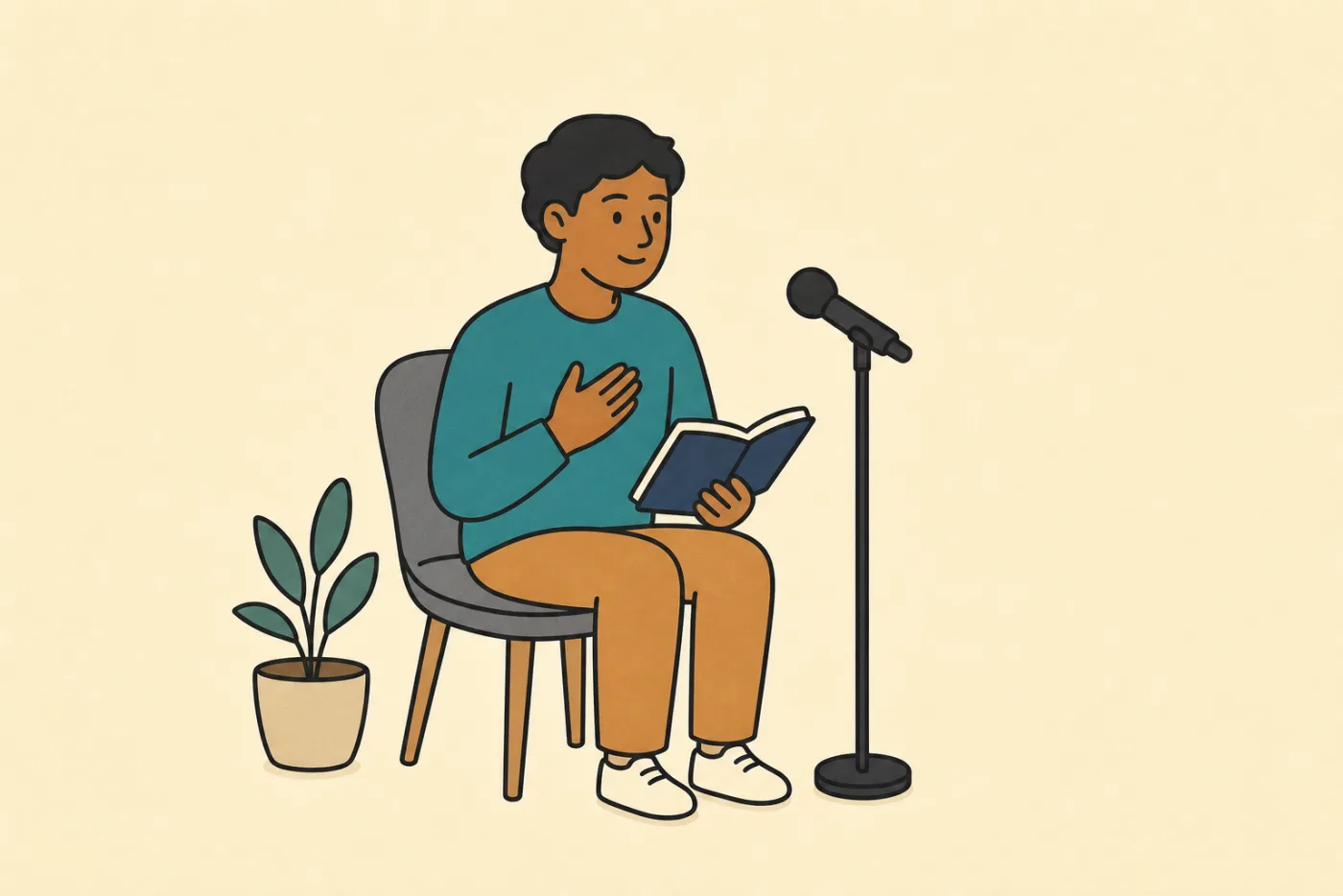
Public speaking for introverts gets easier when you stop treating it like a full performance. The useful skill is building a speaking pattern that does not depend on being loud or performative.
The method is to prepare structure without over-scripting your voice.
Start with the short version, then use the examples below as practice reps.
The quick version
- Use preparation to choose the point.
- Practice shorter speaking reps.
- Keep delivery calm and direct.
- Train Q&A before you are in the room.
Use preparation without over-scripting
Many introverts prepare deeply. That can help, but over-scripting can make speaking feel fragile. If one sentence disappears, the whole speech can feel broken.
Prepare the route instead.
- Main point.
- Reason.
- Example.
- Closing sentence.
This gives you enough structure to feel ready without forcing you to memorize every word.
For prepared-but-natural delivery, read speak extemporaneously.
Start with shorter speaking reps
You do not need to begin with a full speech. Start with one-minute answers.
Pick a prompt, pause for one second, and answer with point, reason, example, close. Then listen back for the first sentence and ending.
This is the same foundation behind public speaking practice, but it works especially well when you want private repetition before speaking live.
Choose calm delivery
Public speaking advice often pushes energy, volume, and performance. Those can matter, but calm delivery can be powerful too.
Focus on these delivery habits:
- Slow down the first sentence.
- Pause before the main point.
- Use one concrete example.
- End before adding nervous extra details.
That style can sound confident without feeling fake.
The point is not to lower the value of your message. The point is to remove the pressure to imitate someone else's speaking style before your structure is reliable.
Practice being seen
For introverts, the hardest part may be the feeling of being watched. Practice that in small steps.
- Record yourself alone.
- Record while standing.
- Practice in front of one trusted person.
- Practice with a short group update.
- Practice a longer presentation.
This builds tolerance gradually. If the visibility itself is the problem, read stage fear.
Handle Q&A without rushing
Q&A can feel harder because you cannot prepare every question.
Use a bridge sentence when you need a second.
- "The way I would think about it is..."
- "The main tradeoff is..."
- "The practical answer is..."
These phrases buy time without sounding evasive. They also connect to think on your feet.
Build a quiet practice routine
Use three short sessions each week.
- Session 1: easy prompts, focus on the first sentence.
- Session 2: work or class prompts, focus on examples.
- Session 3: Q&A prompts, focus on recovery.
Minute Hatch helps introverts practice public speaking privately with prompts, short recordings, and focused feedback. You can build speaking confidence without needing a live audience every day.
For a next step, read public speaking anxiety and how to speak confidently.
Related resources
Keep practicing this topic
Stage Fear: Practice the Moment Before You Speak
A practical stage fear guide for smaller stages, first sentences, short practice, recovery, and weekly routines.
Read guidePublic Speaking for Students: Make Class Answers Clear
A student public speaking guide for clear points, simple structure, class presentation practice, nerves, and feedback.
Read guideHow to Speak Confidently: Start Before You Feel Ready
A practical guide to speaking confidently by using clear starts, slower pacing, concrete examples, and short practice reps.
Read guide