
Toastmasters Impromptu Speaking: Practice Between Sessions
A practical Toastmasters impromptu speaking guide for one-minute routines, prompts, feedback, and between-meeting practice.
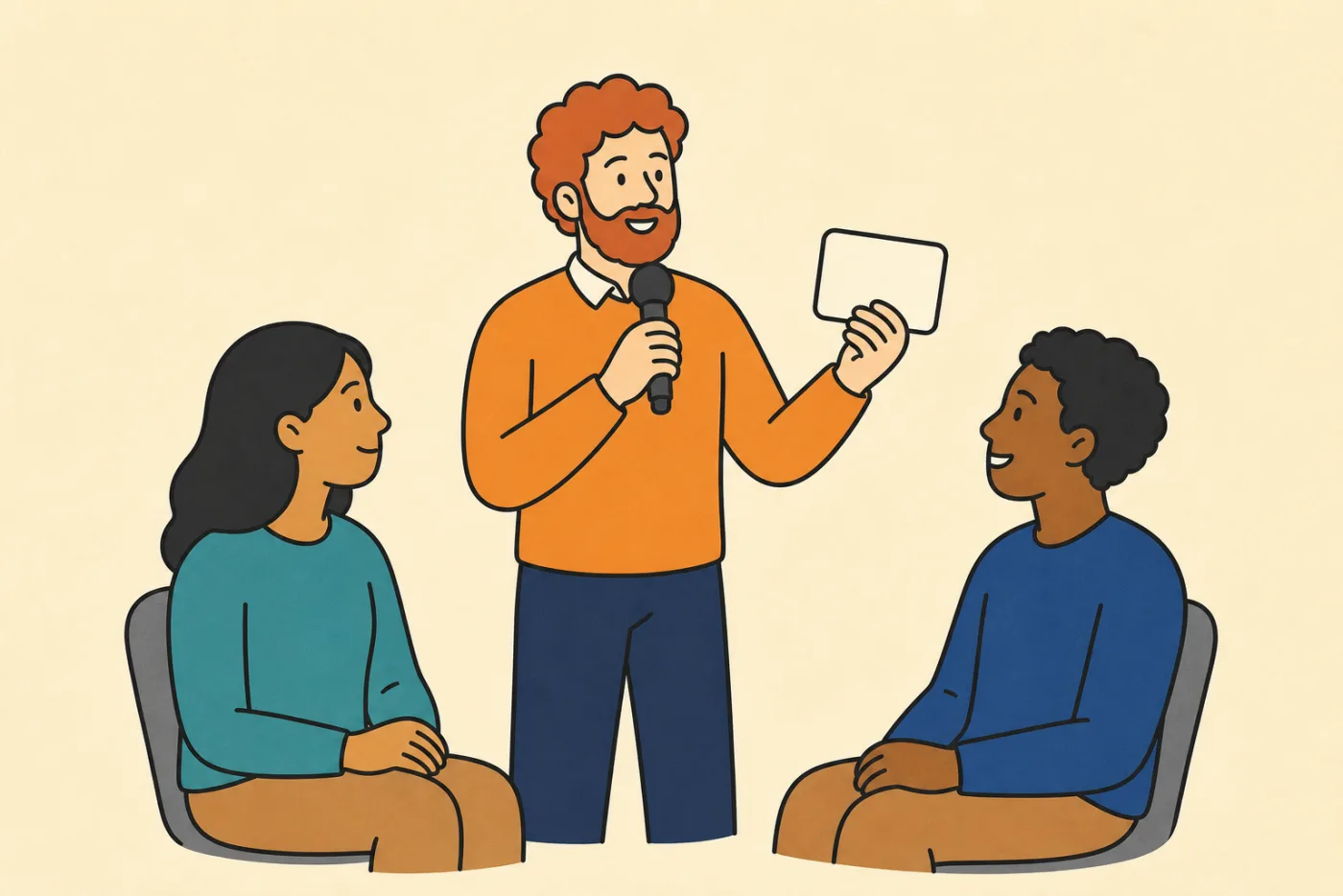
Toastmasters impromptu speaking gets easier when you stop treating it like a full performance. The useful skill is getting more value from Table Topics by practicing between sessions.
The method is to use live sessions for feedback and solo reps for repetition.
Start with the short version, then use the examples below as practice reps.
The quick version
- Practice one-minute answers between meetings.
- Use prompts that feel like Table Topics.
- Listen for structure before cleverness.
- Bring one feedback target to the next session.
What makes a strong impromptu speaker
A strong impromptu speaker does not always have the cleverest answer. They usually do three things well:
- Start with a clear point.
- Support it with one reason or example.
- Stop before the answer becomes a ramble.
That is the same foundation behind impromptu speaking skills.
A Toastmasters-style one-minute routine
Use this loop:
- Pick a prompt you did not prepare.
- Take five seconds to choose your point.
- Speak for 60 seconds.
- Listen for structure, filler words, pacing, and the ending.
- Repeat once with a cleaner answer.
You do not need an impromptu speech ppt to practice this. Slides can help teach the idea, but the skill improves when you speak out loud.
Practice prompts
- What makes someone a good leader?
- Should people practice public speaking alone?
- What habit improves communication fastest?
- Is confidence more important than preparation?
- What makes a speaker trustworthy?
If you want more options, use these impromptu speaking examples.
How to practice between live sessions
Live practice is valuable because you get real audience pressure. Private practice is valuable because you can repeat the same answer without waiting for your next turn.
Between sessions, pick one Table Topics-style prompt and record two takes. In the first take, speak naturally. In the second take, improve only one thing: the opening, the example, the pause, or the close.
This keeps practice focused. You are not trying to become a perfect impromptu speaker in one attempt. You are building one repeatable habit at a time.
Common mistake: chasing clever answers
Many speakers try to be funny, profound, or surprising too early. That can work, but it is not the foundation.
The stronger habit is clarity first. A simple answer with a clear point usually beats a clever answer that wanders. Once your structure is reliable, personality is easier to add.
Feedback checklist
After each answer, ask:
- Did my first sentence have a point?
- Did I give one concrete example?
- Did I use filler words when I lost structure?
- Did I end cleanly?
This turns practice into training instead of just repetition.
If you practice with another person, ask for one note only. Too much feedback after a short answer can become confusing. One clear note gives you something useful to improve in the next take.
Practice with Minute Hatch
Minute Hatch gives you short prompts, one-minute recordings, and focused feedback, which makes it useful for practicing between classes, clubs, meetings, interviews, or public speaking events.
or use the impromptu speech training plan for a seven-day routine.
For a next step, read impromptu speech training and public speaking club.
Related resources
Keep practicing this topic
Impromptu Speaking Skills: Drills That Build Clear Answers
Seven impromptu speaking skills you can practice with short drills, recordings, and one focused correction at a time.
Read guideImpromptu Speech Practice: The 60-Second Loop
A repeatable impromptu speech practice loop for clearer starts, stronger examples, and cleaner endings.
Read guideImpromptu Speech Training: A 7-Day Practice Plan
A seven-day impromptu speech training plan for first sentences, reasons, examples, endings, and recovery.
Read guide