
Public Communication Skills: Be Clear Before You Perform
A practical guide to public communication skills for clearer points, concrete examples, shorter answers, and better Q&A.
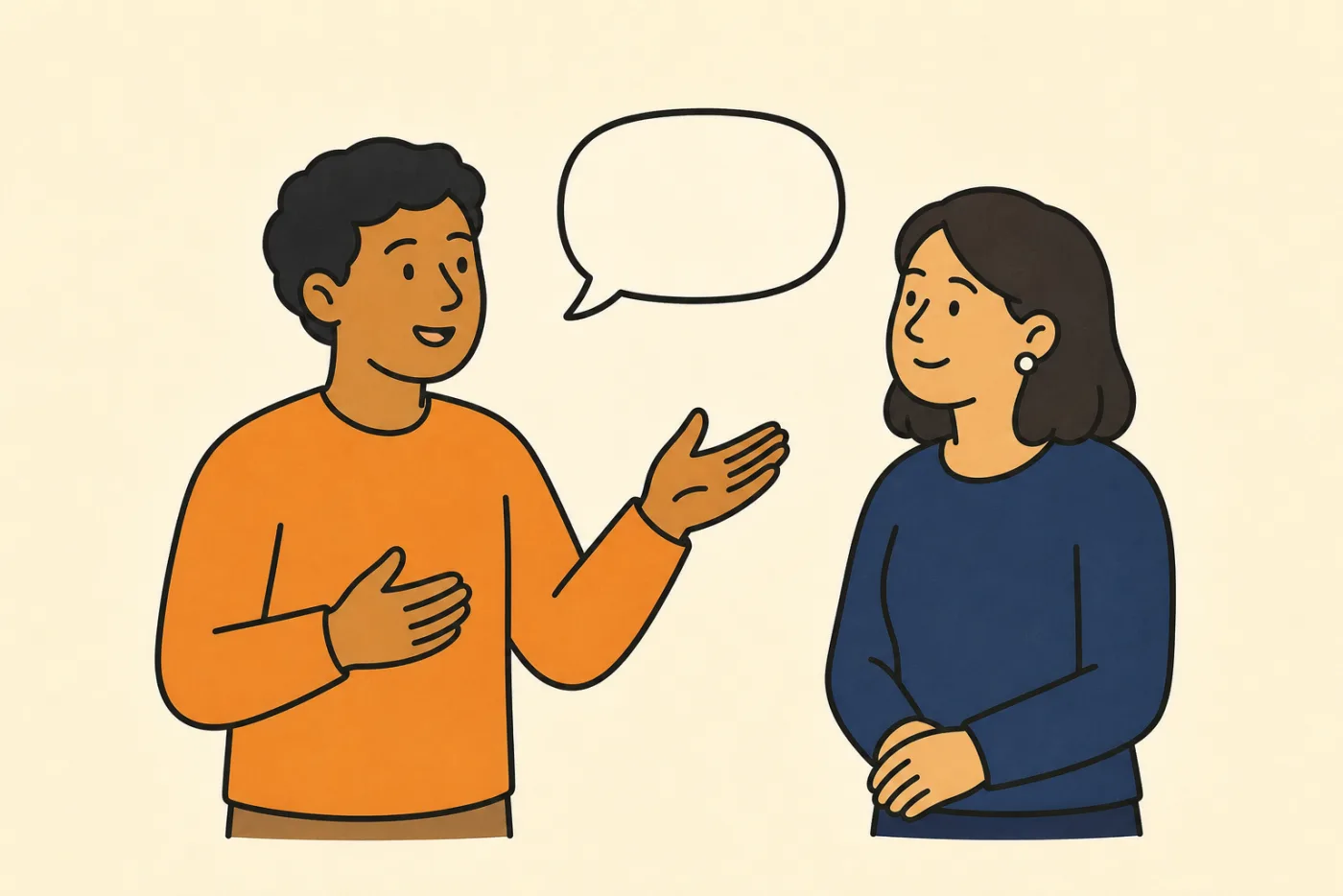
Public communication skills get easier when you stop treating it like a full performance. The useful skill is helping people understand the point before they judge the performance.
The method is to design the answer around the listener.
Start with the short version, then use the examples below as practice reps.
The quick version
- Start with listener clarity.
- Make the point concrete.
- Control the length of the answer.
- Practice Q&A, not only speeches.
Start with listener clarity
Good communication public speaking starts with the listener. What do they need to understand first?
Usually, they need the point before the background.
Instead of starting with every detail, say the point in one sentence. Then add the reason and example.
This is the same structure used in workplace communication skills, but it applies beyond work.
Make the point concrete
Public communication skills improve when your ideas become specific.
If you say "communication matters," the listener may agree but forget it. If you say "a clear update tells people what is done, what is blocked, and what decision is needed," the listener has something useful to remember.
Concrete examples make public speaking and communication more persuasive.
Control the length of the answer
Long answers are not always better. Many public communication problems come from saying too much before the listener understands the main idea.
Use a simple limit: one point, one reason, one example, one close.
If you often lose the thread, read how to stop rambling and practice shorter answers.
Practice public Q&A
Q&A is where communication gets tested. You may not know the question in advance, and people expect a clear answer quickly.
Use one-minute prompts to practice.
- Pause before answering.
- Choose one angle.
- Answer directly.
- Give one example.
- End cleanly.
This connects closely to think on your feet and impromptu speech practice.
Public communication versus performance
You do not need to perform a personality. Strong public communication often sounds calm, direct, and specific.
The audience does not need every clever phrase. They need a point they can understand and repeat.
For more stage-focused delivery, read public speaking skills. For presentation structure, read speech presentation.
A simple practice routine
Use this routine three times per week.
- Pick one prompt.
- Record a 60-second answer.
- Listen for the first sentence, example, and ending.
- Repeat with one improvement.
This is enough to make public communication practice concrete.
Minute Hatch helps you practice public communication skills with prompts, short recordings, and focused feedback. It is useful when you want clearer speaking without needing a live audience every day.
For a next step, read workplace communication skills and public speaking practice.
Related resources
Keep practicing this topic
How to Stop Rambling: Make Your Point Faster
A practical way to stop rambling by choosing one point, giving one reason, adding one example, and ending cleanly.
Read guideMake Your Ideas Easier to Take Seriously
Why strong ideas can sound weak, and how clearer structure, fewer filler words, and better examples make people listen.
Read guidePublic Speaking for Introverts: Practice First
A practical public speaking guide for introverts who want calm preparation, shorter reps, and clearer Q&A.
Read guide