
Speech Presentation: Practice Before Polishing Slides
A speech presentation guide for clearer messages, simple structure, delivery practice, and a 10-minute routine.
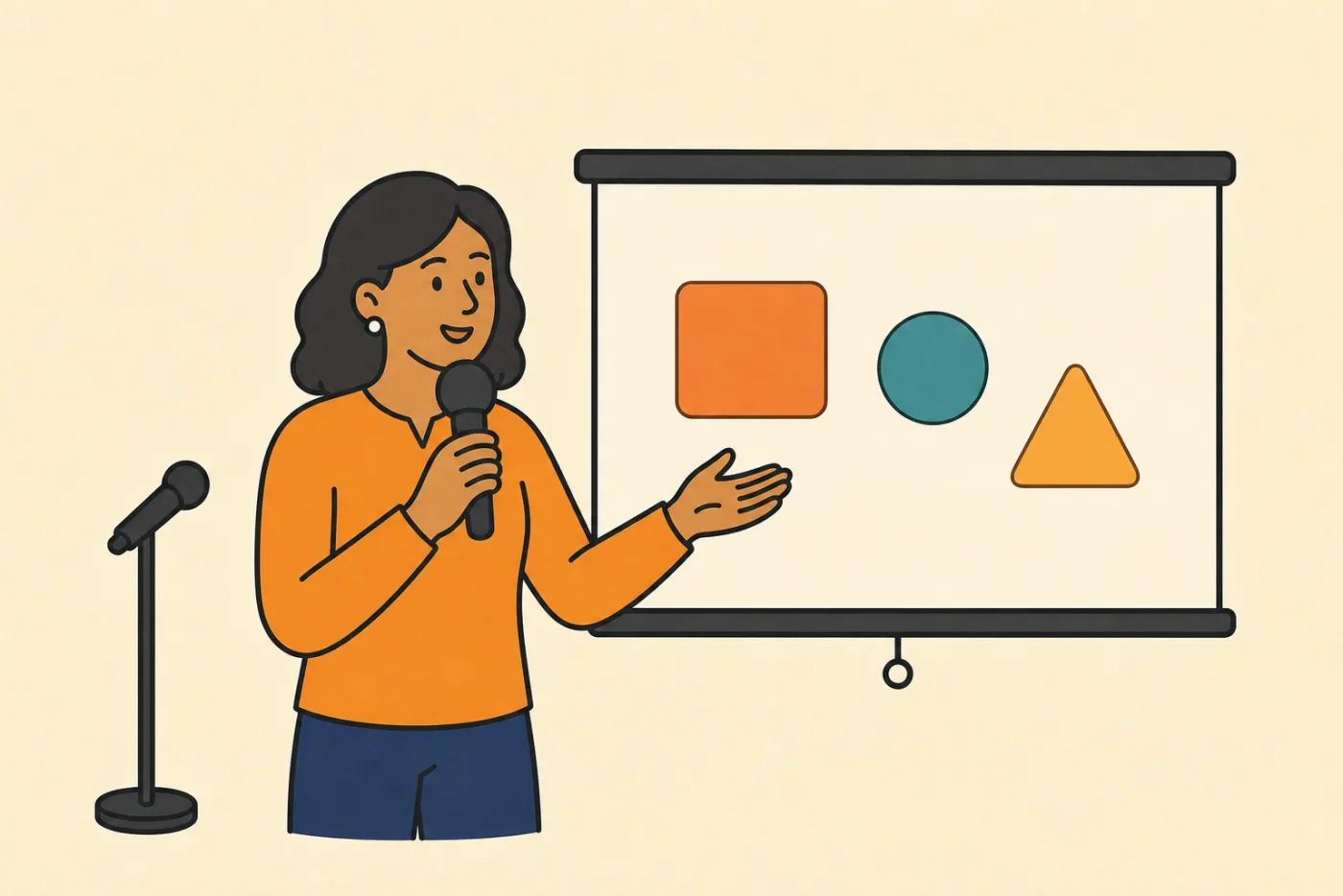
A speech presentation becomes easier when the message has a visible path. The path here is making the spoken point clear before the slides get polished.
The method is to practice the delivery before you over-edit the deck.
Read the quick version first, then use one section as your next practice rep.
If you need to give a presentation on presentation skills, use the same rule: teach one clear behavior before adding more theory.
The quick version
- Start with the message.
- Use a simple presentation structure.
- Practice out loud early.
- Fix delivery before visual polish.
Start with the message
Before writing slides or notes, write the message in one sentence.
For example: "The main problem is not sign-up; it is getting users to their first useful moment." That sentence tells you what the presentation is really about.
If you cannot state the message clearly, the speech will likely drift. The audience cannot follow a path that you have not chosen yet.
Use a simple presentation structure
Use this structure for speech and presentation practice.
- Point: what you want the audience to understand.
- Reason: why it matters.
- Example: what makes it concrete.
- Next step: what the audience should do or remember.
This structure works for short presentations, workplace updates, interview explanations, and public speaking practice.
Practice out loud before polishing slides
Many people polish slides before they know whether the spoken explanation works. That can hide weak structure.
Practice the speech out loud first. Record a 60-second version of the presentation. Then listen for whether the first sentence is clear, the example is specific, and the ending lands.
If the spoken version is unclear, better slides will not fix it.
Build presentation speaking skills
Presentation speaking skills include more than content. Practice delivery too.
- Slow down the first sentence.
- Pause after the main point.
- Use one example before adding more detail.
- Avoid reading every line.
- End with a clear next step.
These small habits make the presentation easier to follow.
For broader delivery skills, read public speaking skills. For prepared-but-natural delivery, read speak extemporaneously.
Avoid overpreparing the wrong thing
Overpreparing exact wording can make a presentation fragile. If you forget one sentence, the whole thing can feel broken.
Prepare the route instead. Know the point, the reason, the example, and the close. Let the exact words vary.
This is also why oratory skills matter. Strong speakers do not only memorize. They understand the path of the message.
A 10-minute practice routine
Use this routine before a speech presentation.
- Minute 1: write the message in one sentence.
- Minutes 2-3: choose one example.
- Minutes 4-5: record a 60-second version.
- Minutes 6-7: listen for the opening, example, and ending.
- Minutes 8-10: repeat with one correction.
This is short enough to repeat and focused enough to improve the real speaking moment.
Minute Hatch helps you practice speech presentation delivery with prompts, short recordings, and focused feedback. It is useful for public speaking and presentation skills because it makes spoken practice easy to repeat.
For a next step, read public speaking practice and speak extemporaneously.
Related resources
Keep practicing this topic
Public Speaking for Students: Make Class Answers Clear
A student public speaking guide for clear points, simple structure, class presentation practice, nerves, and feedback.
Read guideSpeaking in Front of a Crowd: Practice the First 10 Seconds
A practical guide to speaking in front of a crowd with calmer starts, clear structure, gradual pressure, and recovery.
Read guideExample of Extemporaneous Speech
See an example of extemporaneous speech with a complete one-minute answer, reusable structure, delivery notes, and a simple practice routine.
Read guide