
Oratory Skills: Make Your Point Clear and Persuasive
A practical guide to oratory skills: clear claims, useful reasons, concrete examples, rhythm, and short practice drills.
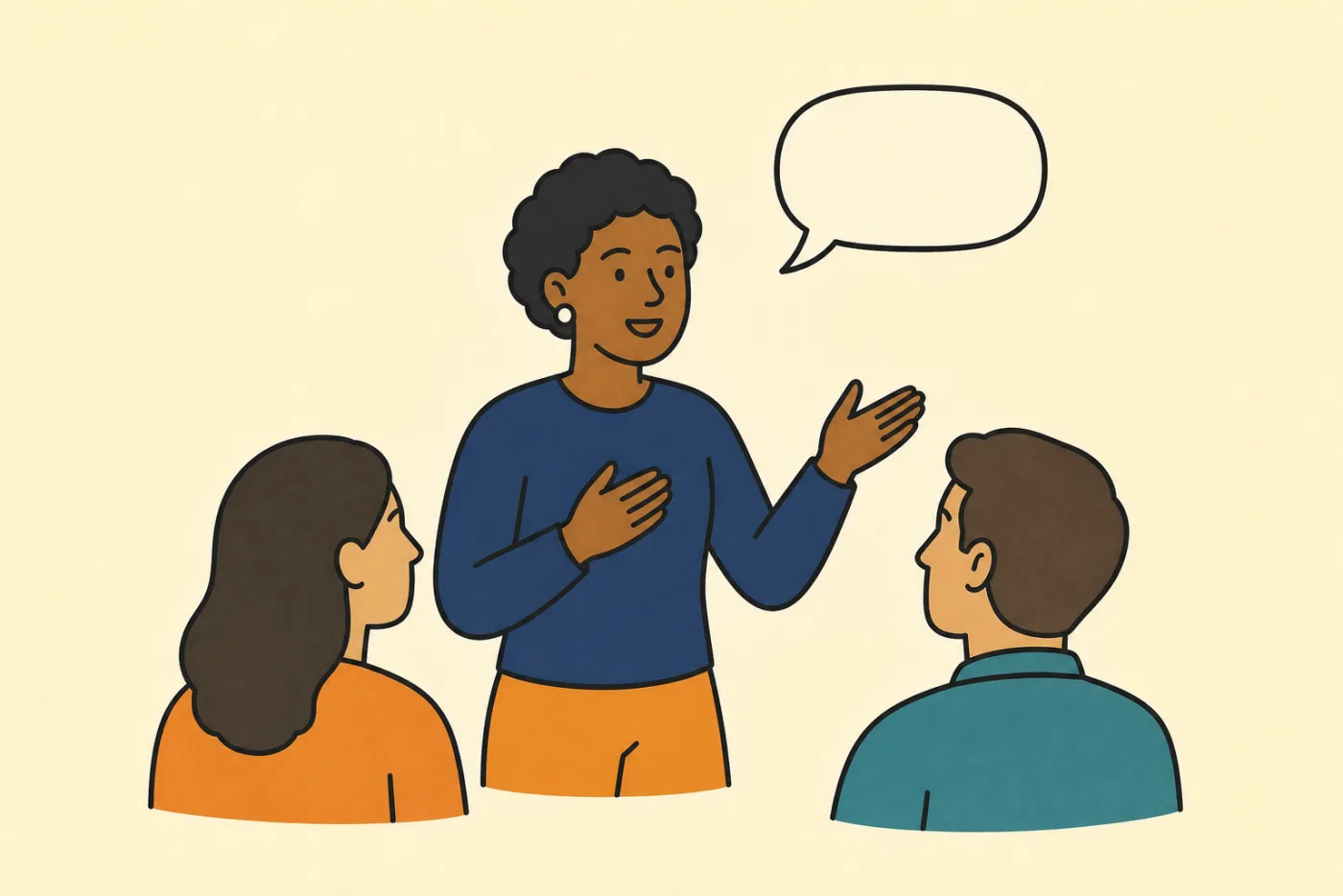
Oratory skills improve when you practice the exact moment that usually breaks down. For this topic, that means making your ideas easier to follow and believe.
The method is to make persuasion depend on clarity before style.
The quick version
- Start with one claim.
- Support it with one reason.
- Use examples instead of vague intensity.
- Practice rhythm without sounding artificial.
Start with one clear claim
Every oratorical speech needs a claim. The claim is the sentence the listener should remember.
For example: "Clear communication turns smart work into trusted work." That sentence gives the speech a direction. The rest of the answer can explain, prove, and reinforce it.
Without a claim, the speech becomes a collection of related thoughts. Related thoughts are not enough. The listener needs a path.
Support the claim with a reason
After the claim, explain why it matters. The reason gives the listener a way to evaluate your point.
If your claim is that clear communication matters at work, your reason could be that unclear messages slow decisions and create rework.
This structure is useful for speech presentation, public speaking skills, and speak extemporaneously practice because it keeps your words connected to the point.
Use examples to create persuasion
An oratory speech becomes stronger when the audience can picture the idea.
Use one example that proves the point. Do not stack three loose examples unless each one adds something new.
For example, instead of saying "leaders should communicate better," show a moment where a vague update creates confusion and a clear update creates action.
The example turns the idea from abstract to useful.
Practice rhythm without sounding fake
Rhythm matters, but it should not sound theatrical unless the situation calls for it. In most modern speaking situations, a calm rhythm is more useful than a dramatic one.
Practice three things:
- Pause before the important point.
- Slow down during the example.
- End the sentence fully before moving on.
These small delivery choices make oratorical skills easier to hear.
Record short oratory drills
Use one-minute drills instead of full speeches at first.
- Pick one claim.
- Add one reason.
- Add one example.
- Close with one sentence.
Then listen back. Did the claim land? Did the example support it? Did your ending sound complete?
This is close to public speaking practice, but the focus is persuasion and structure.
Oratory skills in everyday situations
You do not need a stage to use oratory skills. They help when you explain an idea to a team, defend a decision, answer a question in class, or present a point in an interview.
The everyday version is simple: say what you believe, explain why, show it with an example, and stop.
If you freeze before you start, read stage fear. If your answers become too long, read how to stop rambling.
Minute Hatch helps you practice oratory skills privately with prompts, short recordings, and focused feedback. You can train the structure before you need it in a real speech.
For a next step, read public speaking skills and speech presentation.
Related resources
Keep practicing this topic
Public Speaking Skills: Practice the Parts People Hear
A practical guide to public speaking skills: first sentences, examples, pauses, exercises, routines, and progress.
Read guidePublic Speaking for Students: Make Class Answers Clear
A student public speaking guide for clear points, simple structure, class presentation practice, nerves, and feedback.
Read guideSpeaking in Front of a Crowd: Practice the First 10 Seconds
A practical guide to speaking in front of a crowd with calmer starts, clear structure, gradual pressure, and recovery.
Read guide