
What Is an Impromptu Speech? How to Practice
Learn what an impromptu speech is, then use a simple structure, realistic prompts, and one-minute drills to practice speaking clearly on the spot.
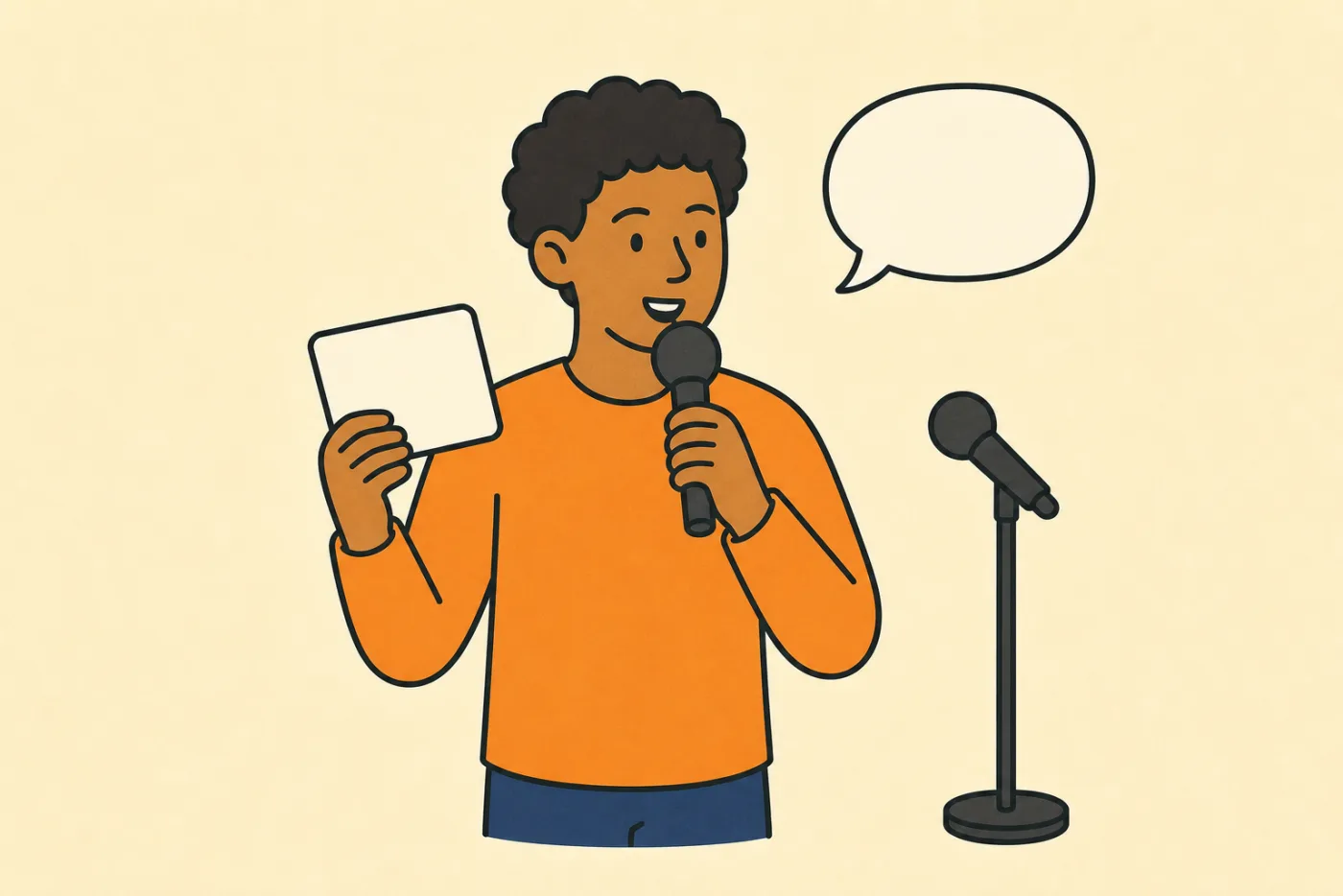
An impromptu speech is a short, unscripted talk delivered with little or no preparation. Common examples include answering a classroom prompt, giving a meeting update, or responding to an unexpected interview question.
The goal is not perfect wording. It is organizing one clear idea while you speak.
The method is to define the moment, use a small structure, and practice short answers.
The sections below give you the structure first, then the practice steps.
The quick version
- An impromptu speech is unscripted and usually short.
- The goal is clarity, not perfection.
- Use one point, one reason, one example, and one close.
- Practice with prompts that do not require research.
Simple definition
Impromptu means you organize the answer as you speak rather than reading a script. The answer is usually immediate and short.
It can be formal, like answering a classroom prompt, or casual, like explaining your opinion in a meeting. The common thread is that you have to organize your thoughts quickly and speak before you feel fully ready.
Where impromptu speeches happen
Impromptu speech moments show up in normal life more often than people expect:
- A teacher asks for your opinion in class.
- An interviewer asks a question you did not rehearse.
- A manager asks for a quick project update.
- A client asks why your idea matters.
- Someone at an event asks you to introduce yourself.
For work and school, the skill matters because people judge your thinking through your answer. A clear answer makes you sound more prepared, even when the question was unexpected.
What makes a good impromptu speech
A good impromptu speech is not perfect. It is clear.
Use one direct point, one reason, one example, and one close. That small structure is easier to remember than a long speech format, and it works for most short answers.
Example:
"The most useful communication skill is clarity. It matters because people cannot act on an idea they do not understand. For example, a project update that names the decision, the blocker, and the next step helps the whole team move faster. So I would choose clarity because it makes every other skill easier to trust."
That answer works because it gives the listener one idea to follow.
Impromptu speech vs prepared speech
A prepared speech is planned before you speak. You may write notes, rehearse, and adjust the wording.
An impromptu speech is built in the moment. You still need structure, but you need a structure that can be used quickly.
If you want examples of the difference between prepared-but-unscripted speaking and speaking on the spot, read this example of an extemporaneous speech.
How to practice
The fastest way to improve is to practice one short answer at a time:
- Pick a prompt you did not prepare.
- Take five seconds to choose one point.
- Speak for 60 seconds.
- Listen back for clarity, filler words, and the ending.
- Repeat once with a tighter point.
This is the same loop behind impromptu speech practice. You are training your brain to find a structure while the pressure is still present.
Prompts to try
Start with prompts that do not require research:
- What makes a good teammate?
- Should people practice difficult conversations?
- What is one habit that improves confidence?
- What makes an explanation easy to follow?
- Is preparation more important than confidence?
If you want a larger prompt list, use these impromptu speaking examples.
Final takeaway
An impromptu speech is not about sounding polished every time. It is about giving the listener a clear point when you do not have a script.
For a next step, read impromptu speech, choose one of these impromptu speaking examples, or start a private rep with the impromptu speaking practice app.
Related resources
Keep practicing this topic
Impromptu Speech: Speak Clearly With No Script
A practical guide to impromptu speech structure, prompts, examples, and one-minute practice.
Read guideImprovisation Speech: Talk Clearly on the Spot
Learn how to handle an improvisation speech by finding a point, structuring it quickly, and talking clearly on the spot without a prepared script.
Read guideExample of Extemporaneous Speech
See an example of extemporaneous speech with a complete one-minute answer, reusable structure, delivery notes, and a simple practice routine.
Read guide