
Impromptu Speech: Speak Clearly With No Script
A practical guide to impromptu speech structure, prompts, examples, and one-minute practice.
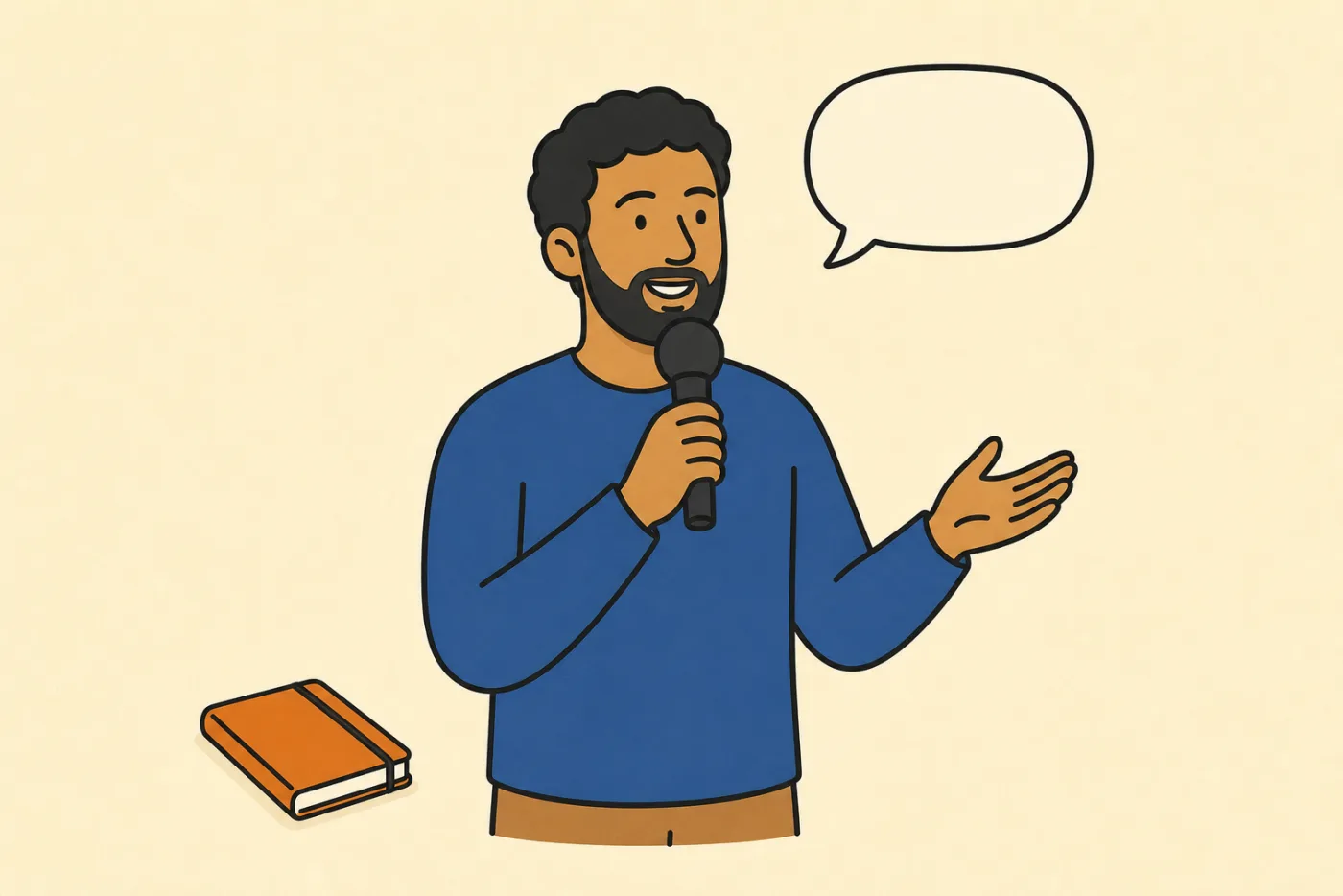
The goal of an impromptu speech is not to fill time. The goal is speaking clearly when you do not have a script.
The method is to give the listener one point they can follow.
Use the quick version first. Then practice the detailed sections out loud.
The quick version
- Pause before choosing words.
- Pick one point.
- Support it with one reason or example.
- Close before the answer becomes a ramble.
What makes an impromptu speech work
A strong impromptu speech usually has four parts:
- A direct point.
- One reason that supports the point.
- One example that makes it concrete.
- A short close that tells the listener what to remember.
That structure is simple on purpose. When you are put on the spot, a complex outline is hard to use. A small structure gives your brain somewhere to go next.
A simple impromptu speech structure
Use point, reason, example, close.
Start with the point: "I think the most important skill is clear communication."
Add the reason: "It makes every other skill easier to trust because people understand what you mean and what you need."
Give an example: "In a team meeting, a clear update can prevent days of confusion."
Close the answer: "So if I had to choose one skill, I would choose communication because it compounds across every kind of work."
That is enough for a short impromptu talk. You do not need five supporting points. You need one idea that lands.
Impromptu talk vs impromptu speech
An impromptu speech usually sounds more formal, while an impromptu talk can feel like a clear answer in a conversation. Both use the same core structure: point, reason, example, close.
For a conversational answer, use natural openings such as "My short answer is..." or "The main reason is..." If the question is broad, narrow it before you answer: "For this situation..." or "If we are deciding the next step..." That gives the listener context and prevents the answer from spreading across too many ideas.
The goal is not to perform a speech every time someone asks a question. It is to make an unscripted thought organized enough to follow.
How to practice impromptu speaking
Use a short daily loop:
- Pick a prompt you did not prepare.
- Take five seconds to choose your point.
- Speak for one minute.
- Listen back for clarity, filler words, pacing, and the ending.
- Repeat the same prompt once with a tighter structure.
This is the core of impromptu speech practice. The goal is not to become flawless. The goal is to become less surprised by the feeling of speaking before you are ready.
Impromptu speech prompts to try
- What skill matters most at work?
- Should people practice difficult conversations before they happen?
- What makes someone easy to trust?
- What is one habit that improves communication?
- Is confidence more important than preparation?
For more practice material, use these impromptu speaking examples and record one answer at a time.
Where people use impromptu speaking
Impromptu speaking shows up more often than formal speeches:
- Answering interview questions.
- Explaining an idea in a meeting.
- Responding during a presentation Q&A.
- Introducing yourself at a networking event.
- Giving a quick opinion in class or at work.
That is why unprepared speech matters. The skill is not only for stages. It is for everyday moments where your answer affects how clearly people understand you.
Practice with Minute Hatch
Minute Hatch is an impromptu speaking practice app built around short prompts, one-minute recordings, and focused feedback. It helps you practice impromptu speech without needing an audience or a formal speaking event.
Use the impromptu speech practice loop when you want to build the skill in a repeatable way.
For a next step, read what is an impromptu speech and unprepared speech.
Related resources
Keep practicing this topic
Impromptu Speech Practice: The 60-Second Loop
A repeatable impromptu speech practice loop for clearer starts, stronger examples, and cleaner endings.
Read guideImprovisation Speech: Talk Clearly on the Spot
Learn how to handle an improvisation speech by finding a point, structuring it quickly, and talking clearly on the spot without a prepared script.
Read guideSpontaneous Speaking: Pause, Pick a Point, Answer
A practical spontaneous speaking guide for surprise questions, short pauses, clear points, and repeatable drills.
Read guide