
Impromptu Speech PPT: 10-Slide Lesson Plan
Build an impromptu speech PPT with a ready-to-use 10-slide outline, speaking prompts, a simple speech structure, and a practical feedback checklist.
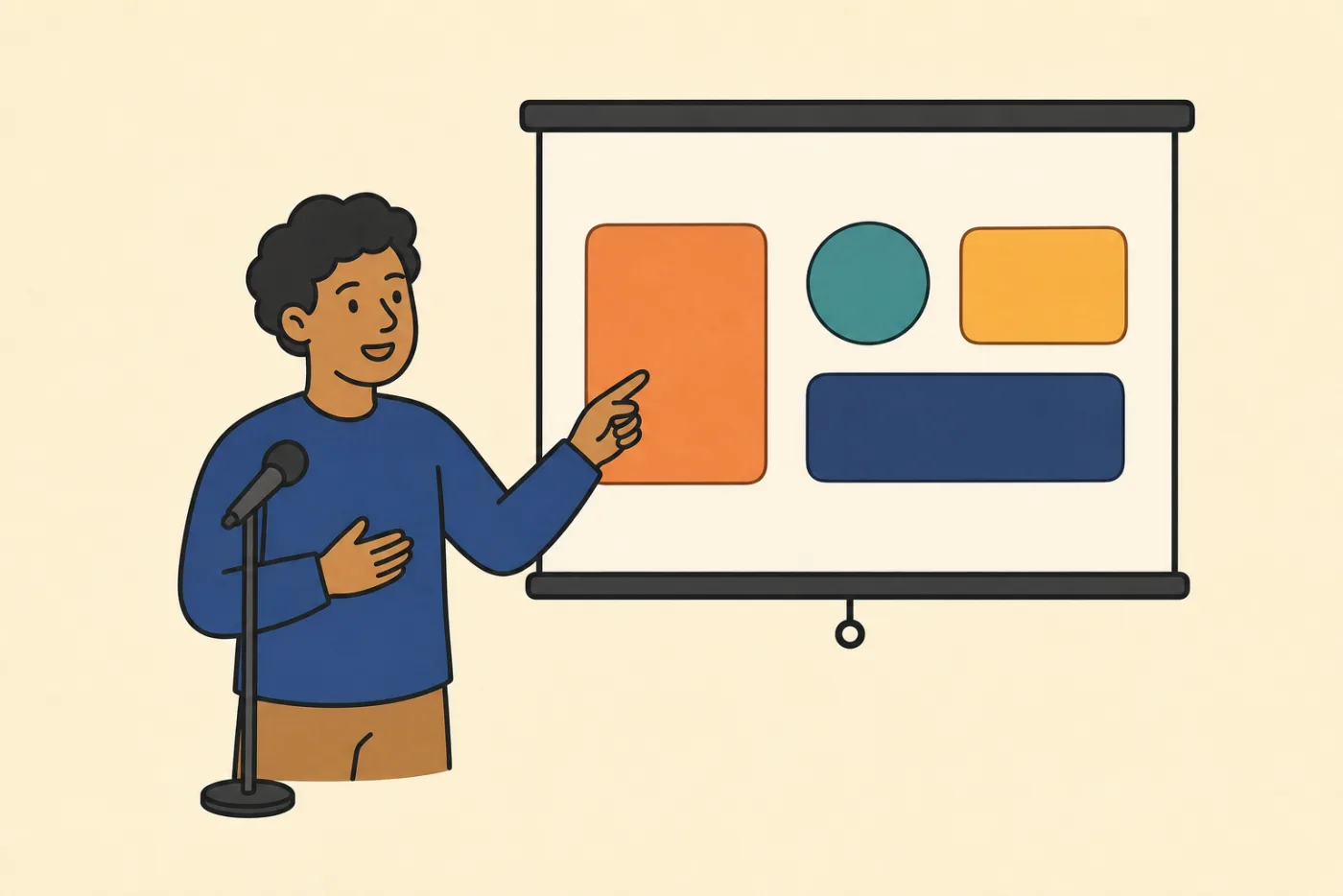
An impromptu speech PPT works better when the listener can see the structure quickly. That starts with teaching practice instead of only defining the skill.
The method is to make every slide create a speaking action.
The quick version
- Define impromptu speaking quickly.
- Show the one-minute structure.
- Give the group prompts they can answer immediately.
- Use a listening checklist so feedback stays specific.
Slide 1: What impromptu speaking means
Define the skill in plain language: an impromptu speech is a short talk or answer given without a prepared script.
Then make the use case concrete:
- Interview questions.
- Class discussions.
- Meeting updates.
- Presentation Q&A.
- Networking introductions.
The first slide should help people understand that impromptu speech practice is not only for formal public speaking. It is for everyday moments where clear thinking has to happen quickly.
Slide 2: Why people freeze
Explain the common reason people freeze: they try to find the perfect answer before they start.
A better goal is to find a clear first point, then support it with one reason and one example. That is easier to teach, easier to remember, and easier to practice under pressure.
Slide 3: The one-minute structure
Use a four-part structure:
- Point: Say the main idea directly.
- Reason: Explain why it matters.
- Example: Make the point concrete.
- Close: Repeat the takeaway in one sentence.
This is the same structure used in impromptu speech practice. It keeps the answer short enough for beginners and flexible enough for stronger speakers.
Slide 4: Example impromptu speech
Use one simple example before asking people to try it.
Prompt: What skill matters most at work?
Answer: "The most important skill at work is clear communication. It matters because good ideas do not help if people cannot understand them. For example, a team update that names the decision, the blocker, and the next step can save days of confusion. So I would choose communication because it makes every other skill easier to trust."
For more samples, use this example of an impromptu speech.
Slide 5: Practice prompts
Give prompts that do not require research:
- What makes someone easy to trust?
- Should students practice speaking without notes?
- What is one habit that improves teamwork?
- Is confidence more important than preparation?
- What makes a presentation easy to follow?
If you need more prompt categories, use these impromptu speaking examples.
Slide 6: Listening checklist
Give listeners a short checklist so feedback stays useful:
- Was the main point clear?
- Did the speaker give a reason?
- Did the speaker include a concrete example?
- Did the answer end cleanly?
- Were filler words distracting?
This turns an impromptu speech PPT into a practice session instead of a passive lesson.
Slide 7: Common fixes
Show the most common improvements:
- If the answer rambles, choose one point.
- If the answer sounds vague, add one example.
- If the answer ends awkwardly, repeat the takeaway.
- If filler words take over, pause before the next sentence.
These fixes are also useful for improving impromptu speaking skills.
Slide 8: Class or workshop drill
Run a simple speaking drill:
- Give one prompt.
- Allow five seconds of thinking time.
- Ask the speaker to answer for 60 seconds.
- Ask one listener to name the point, reason, example, and close.
- Repeat with a new prompt.
This works for teaching impromptu speaking because it gives everyone a clear job. The speaker practices structure, and the listener practices hearing clarity.
Slide 9: How to practice after class
The best follow-up is short daily practice. One minute is enough when the session is focused.
Pick a prompt, record one answer, listen back, and repeat the same answer once with a clearer point. That small loop builds the habit faster than reviewing slides alone.
For a next step, read how to start an impromptu speech and impromptu speech training.
Slide 10: Final takeaway
Close the PPT with one message: a good impromptu speech is not perfect. It is clear.
If people leave with only one tool, make it point, reason, example, close. That structure gives them somewhere to go when they have to speak before they feel ready.
Related resources
Keep practicing this topic
Impromptu Speech Training: A 7-Day Practice Plan
A seven-day impromptu speech training plan for first sentences, reasons, examples, endings, and recovery.
Read guideHow to Start an Impromptu Speech Without Freezing
A simple way to start an impromptu speech with a clear first sentence instead of filler or panic.
Read guideHow to Stop Rambling: Get to the Point Faster
Stop rambling in meetings, interviews, and everyday conversations with a point-reason-example-close structure and a one-minute recording drill.
Read guide